







Nobel Peace Prize Amid the Ruins: How Awarding Navi Pillay Split the World and Trapped Ukraine in a Vise
Analytics | | 318 | Author: Olena Zelenina
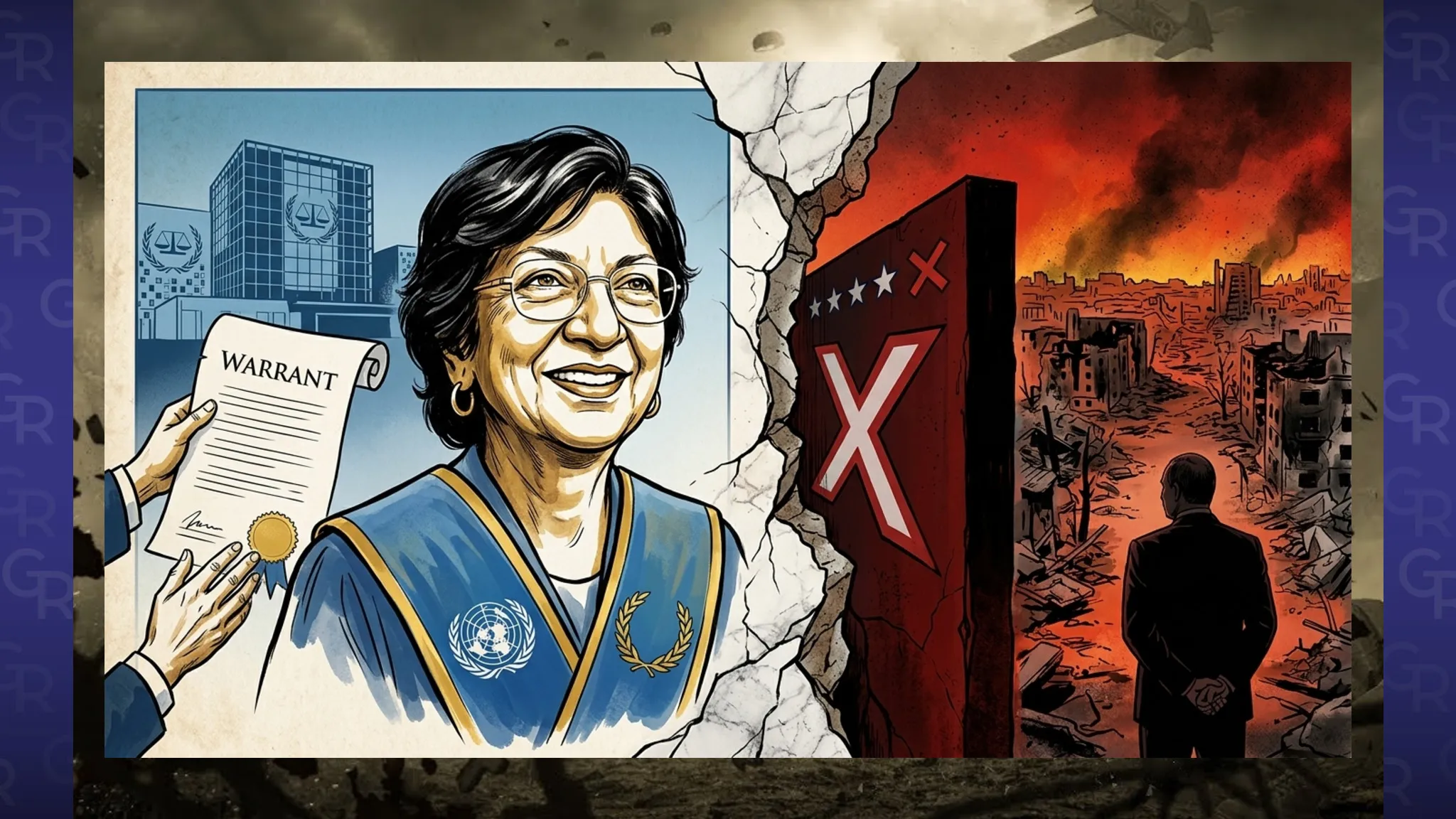
AI-illustration based on the author's prompt.
“Rape was always considered an inevitable byproduct of war. From now on, it is a crime. We are sending a clear message to the world: a woman's body is no longer a trophy for the victors.”
The South African lawyer Navi Pillay uttered these words at a time when most of her male colleagues in formal robes merely shrugged their shoulders. But back in the 1990s at the International Criminal Tribunal for Rwanda, she accomplished what seemed impossible: she proved that sexual violence in war is not a “side effect” or a surge of hormones in soldiers, but a planned, cold-blooded weapon of destruction that must be prosecuted as genocide.
Today, this uncompromising woman, who once as a young Black girl challenged the racist apartheid courts in South Africa and later stood at the origins of the International Criminal Court (ICC) in The Hague, has risen to the highest global pedestal. The 2026 Nobel Peace Prize was awarded to Navi Pillay.
It would seem time to buy champagne and celebrate the triumph of global justice? If only! Awarding the Nobel to Pillay did not unite the world; instead, it instantly tore off all diplomatic masks and exposed the most painful ulcer of modern geopolitics.
A Geopolitical Explosion Instead of Ovations
The drama unfolded right before our eyes: mere hours after the solemn announcement in Oslo, a crushing blow arrived from Washington. The US Administration issued an executive order imposing massive, almost total sanctions against... the very same International Criminal Court!
Just reflect on this absurdity: while the global elite applauds a lawyer who dedicated her life to building the ICC, the world's most powerful democracy launches a real financial and legal war against this very institution! How did we arrive at a point where an institution created to punish monsters and dictators finds itself branded an “outcast” by the White House?
“The answer lies in a fierce clash between idealistic law and cynical geopolitics,” believes human rights defender Volodymyr Ponomarenko.
He recalls that the real detonator was the escalation of events surrounding the Gaza Strip. In the autumn of 2024, the ICC issued arrest warrants for Israeli Prime Minister Benjamin Netanyahu and former Minister of Defense Yoav Gallant.
At the same time, many bitter questions arose in the public sphere regarding the proportionality and speed of The Hague’s actions against the organizers of the bloody October 7 massacre from Hamas—warrants against them either came too late due to the elimination of the perpetrators or were lost in the shadow of high-profile political decisions, leaving many with a sense of a distorted balance.
Add to this The Hague’s long-standing desire to investigate the actions of US service members in Afghanistan, and Washington’s reaction became predictably aggressive.
“We will not allow this rogue court to target Americans and our allies!” snapped US Secretary of State Marco Rubio.
And when the Nobel Committee awarded the prize to Navi Pillay—who, incidentally, headed the UN Commission of Inquiry on Palestine and sharply criticized Israel’s actions—the White House viewed it as an overt and calculated political provocation.
However, Donald Trump’s executive order is not just an “outburst.” It is an attempt to derail the ICC entirely: a complete ban on financial transactions and the threat of secondary sanctions for banks, IT companies, telecommunications, and global legal giants. They are simply trying to cut off the supply of oxygen to The Hague.
Ukraine Between Two Fires:
A Drama in a Vise
And this is precisely where the most painful, almost Shakespearean question for Ukraine arises. We find ourselves in a heavy geopolitical vise.
“On one hand, after the horrors of Bucha, Irpin, Mariupol, and the scorched eastern cities, the ICC became Ukraine’s main hope for ultimate justice,” comments the human rights defender.
It was the ICC’s arrest warrant for Vladimir Putin over the abduction of Ukrainian children that turned the Russian dictator into an international pariah, forcing him to cancel visits even to allied nations.
Without the legal foundation that Navi Pillay spent her entire life building, and without the mechanisms of The Hague, holding Kremlin war criminals accountable would be legally impossible. For Ukraine, the ICC is the instrument of our moral and legal victory.
On the other hand, our main guarantor of physical survival and provider of weapons is the United States. And when our key military ally declares the ICC an “unlawful rogue court” and attempts to paralyze it, Kyiv finds itself in a critical trap.
How can we demand a trial for Putin in The Hague if our main donor is financially and technologically suffocating that very same court?
How can we preserve unity with Europe, which defends the Rome Statute, while simultaneously avoiding a rift with the White House, on which our front line depends?
The Nobel Peace Prize for Navi Pillay was meant to be a monument to the triumph of international justice. Instead, it showed the world as it truly is: a world where Ukrainian Bucha awaits a verdict for the aggressor from a court whose own allies are stripping it of bank accounts and software.
Navi Pillay gave humanity the standards that allow for the trial of dictators. But whether the system itself will withstand the pressure of big politics—and whether Ukraine will get its lawful trial over the aggressor—remains the most acute question of our time.
The "Gromada Group" local media network works thanks to your trust.
Support independent regional journalism with a donation.


Comments
Some more relevant news for now